
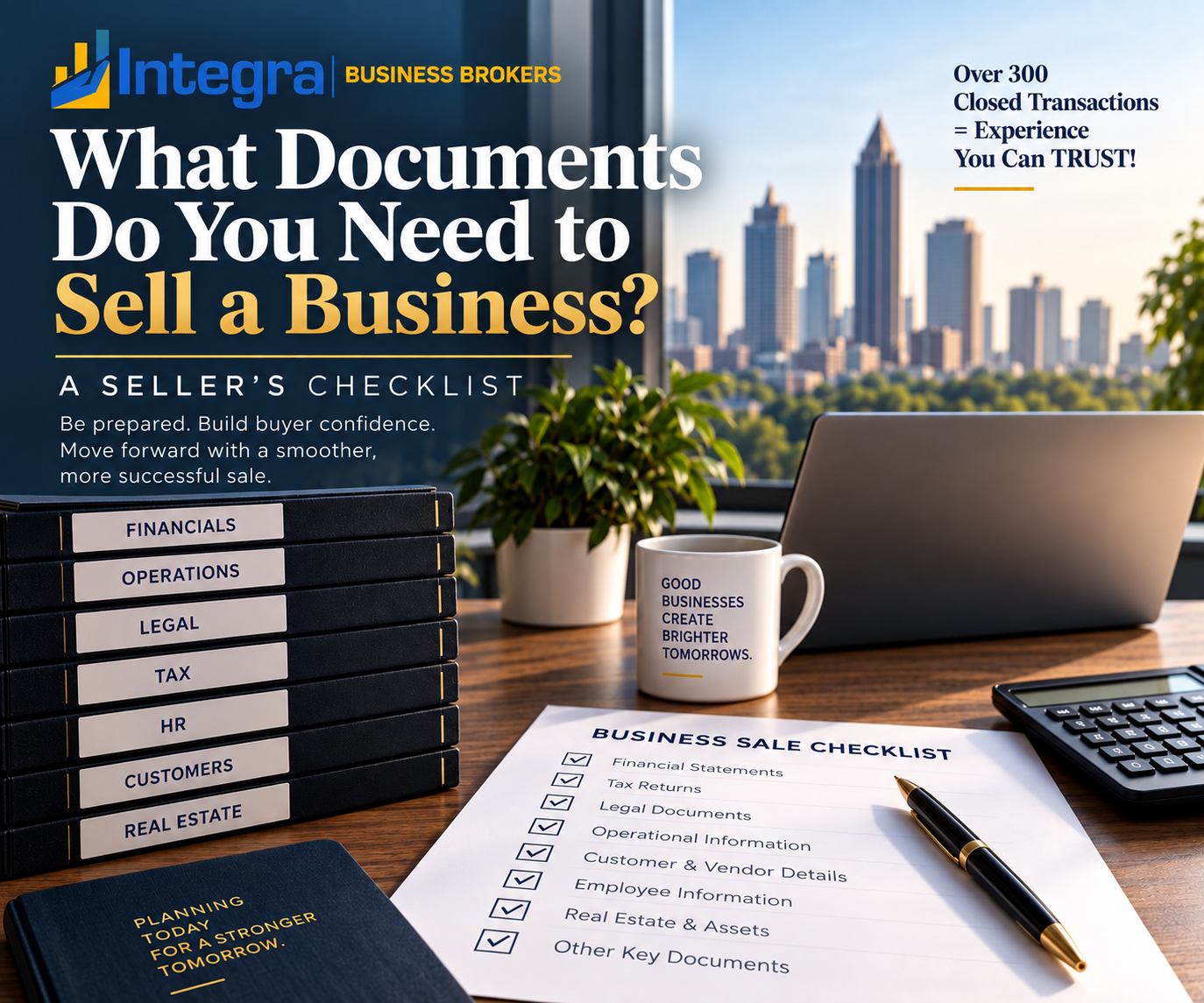
Selling a business involves much more than finding a buyer and agreeing on a price. Once a serious buyer enters the picture, they will want documentation that supports the company’s financial performance, assets, operations, and overall value.
Having these records organized before going to market can make a significant difference. Good documentation helps establish credibility with buyers, makes due diligence easier, and can prevent avoidable delays that threaten an otherwise promising transaction.
If you’re considering selling your business, here are the key documents you should begin gathering.
1. Financial Statements
Financial performance is typically one of the first things a prospective buyer will evaluate. Ideally, sellers should be prepared to provide at least three years of financial statements, including:
- Profit and loss statements
- Balance sheets
- Cash flow statements
- Current year-to-date financials
Buyers use these records to evaluate profitability, trends, expenses, working capital needs, and potential risks.
For many privately held businesses, the financial statements also provide the starting point for calculating Seller’s Discretionary Earnings (SDE) or EBITDA, depending on the size and structure of the company.
Clean, consistent financial records can make a business considerably easier to evaluate.
2. Business Tax Returns
Buyers will generally want to compare the company’s financial statements with its tax filings.
Plan to have approximately three years of federal business tax returns available, along with applicable state returns.
Significant discrepancies between internal financial statements and tax returns are likely to raise questions. That doesn’t necessarily mean there is a problem, but sellers should be prepared to explain legitimate differences.
Your business broker, accountant, and other advisors can help identify potential issues before documents are presented to a buyer.
3. Asset and Equipment Lists
If equipment, vehicles, machinery, furniture, inventory, or other physical assets are included in the sale, prepare a detailed asset list.
Depending on the business, this may include:
- Equipment and machinery
- Company vehicles
- Furniture and fixtures
- Computers and technology
- Inventory
- Specialized tools
- Intellectual property
For significant assets, buyers may also want information about age, condition, ownership, leases, loans, and maintenance history.
A clear asset list helps buyers understand exactly what they are purchasing.
4. Legal and Corporate Documents
Buyers and their attorneys will need to verify the legal structure of the company and identify contractual obligations that could affect a transaction.
Relevant documents can include articles of incorporation or organization, operating agreements, partnership agreements, licenses and permits, franchise agreements, contracts, insurance policies, and information concerning pending or previous litigation.
The exact requirements will depend heavily on the business and the structure of the proposed sale.
This is also an important reason to involve qualified legal counsel during the transaction.
5. Lease and Real Estate Information
If your business operates from leased property, your lease can become an important part of the transaction.
Buyers will want to understand the remaining lease term, renewal options, rent increases, assignment provisions, and whether landlord approval is required for a transfer.
If the business owns real estate, additional property-related documents may be necessary.
Real estate issues should be addressed early because difficulty transferring a lease or securing acceptable occupancy terms can potentially delay a closing.
6. Employee Information
Employees can represent a significant part of a company’s value, particularly when the business depends on experienced managers, technicians, salespeople, or other skilled personnel.
Buyers may request information concerning:
- Employee positions
- Compensation
- Benefits
- Length of employment
- Employment agreements
- Independent contractors
- Organizational structure
However, confidentiality is critical.
Sensitive employee information generally should not simply be handed to every prospective buyer. A business broker can help determine what information should be disclosed, when it should be provided, and how confidentiality should be protected.
7. Customer and Vendor Information
A buyer will want to understand where revenue comes from and whether the company is overly dependent on a small number of customers or suppliers.
Useful information may include customer concentration, recurring or contracted revenue, major supplier relationships, vendor agreements, and significant customer contracts.
Again, protecting confidentiality is important. Detailed customer lists and other sensitive information may be withheld until an appropriate stage of due diligence.
The goal is to give qualified buyers the information necessary to evaluate the business without unnecessarily exposing valuable proprietary information.
8. Operational Information
A buyer isn’t purchasing financial statements alone. They’re purchasing an operating business.
Documents demonstrating how the company functions without the current owner can therefore be extremely valuable.
These might include operating procedures, employee manuals, training materials, organizational charts, supplier procedures, sales processes, software systems, marketing information, and other documented processes.
A well-organized operation can also make the transition to new ownership less risky—a factor buyers often consider when determining what they are willing to pay.
Don’t Wait Until You Have a Buyer
One of the biggest mistakes business owners can make is waiting until a buyer begins due diligence before organizing their records.
Missing documents, unexplained financial discrepancies, incomplete contracts, or outdated records can slow a transaction and potentially weaken a buyer’s confidence.
Preparing early gives you an opportunity to identify problems before they become negotiating issues.
You don’t necessarily need every conceivable document before speaking with a business broker. In fact, an experienced broker can help determine which records are most important for your particular business and what should be addressed before taking the company to market.
Preparing Your Business for a Successful Sale
Every business sale is different. The documents required for a small owner-operated company can differ considerably from those needed for a larger acquisition.
The common denominator is preparation.
At Integra Business Brokers, we’ve successfully closed over 300 transactions, giving our team firsthand experience with the questions buyers ask, the documentation they expect, and the issues that can arise during due diligence.
If you’re considering selling a business in Georgia or simply want to understand what you should be doing now to prepare for a future sale, contact Integra Business Brokers for a confidential consultation.
The earlier you prepare, the better positioned you can be when the right buyer comes along.